Bhutan

THEN, NOW, AND TOMORROW

A Visual Journey


through Bhutan’s development, seen through its cultural and environmental landscapes.

For centuries, the Himalayan kingdom of Bhutan remained unknown, protected by the mighty Himalayan mountains to the North and the thick tropical jungles of the South. Bhutan is one of the few countries in the world that was never conquered by a foreign power. As a result, its landscapes, architecture, traditions and culture remain extraordinarily intact.

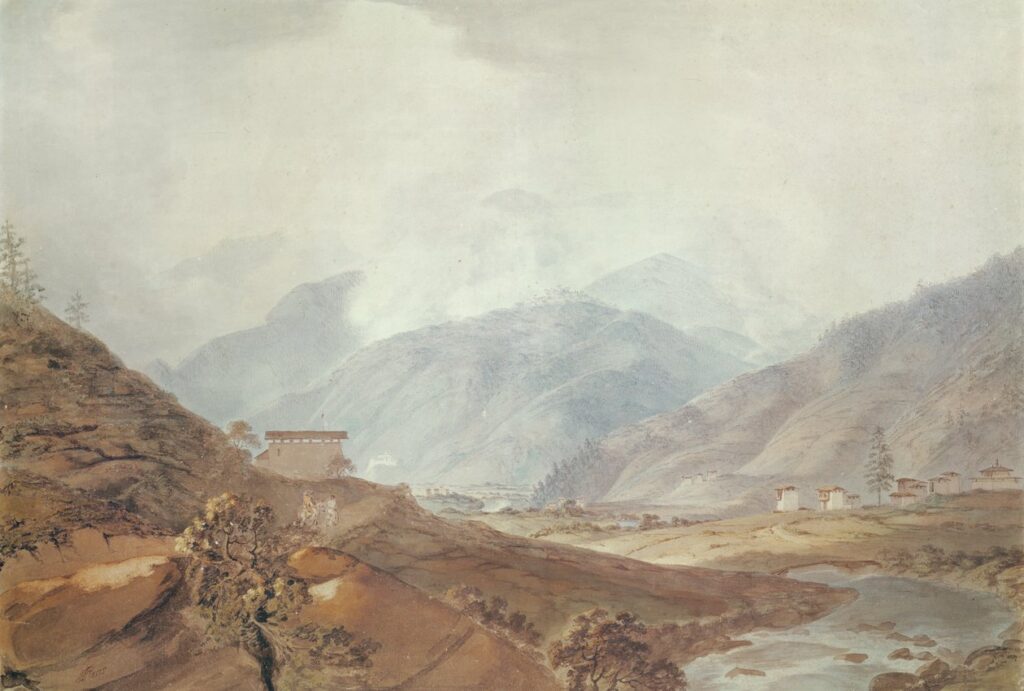
Thimphu Valley, watercolor and pen drawing by Samuel Davis, 1783.

It was only in 1961, that Bhutan began a cautious process of modern development. The kingdom’s fourth king, his Royal Majesty Jigme Singye Wangchuck, intentionally chose an approach that prioritized “Gross National Happiness” over Gross National Product. The first motor roads reached the capital of Thimphu in 1963. Schools, hospitals, industries, electricity, and other modern amenities slowly followed. In 1999, Bhutan was the last country in the world to introduce television and Internet. Since the turn of the 21st century, development has accelerated and the landscape has begun to reflect dramatic growth in construction, urbanization and the influence of Western culture.
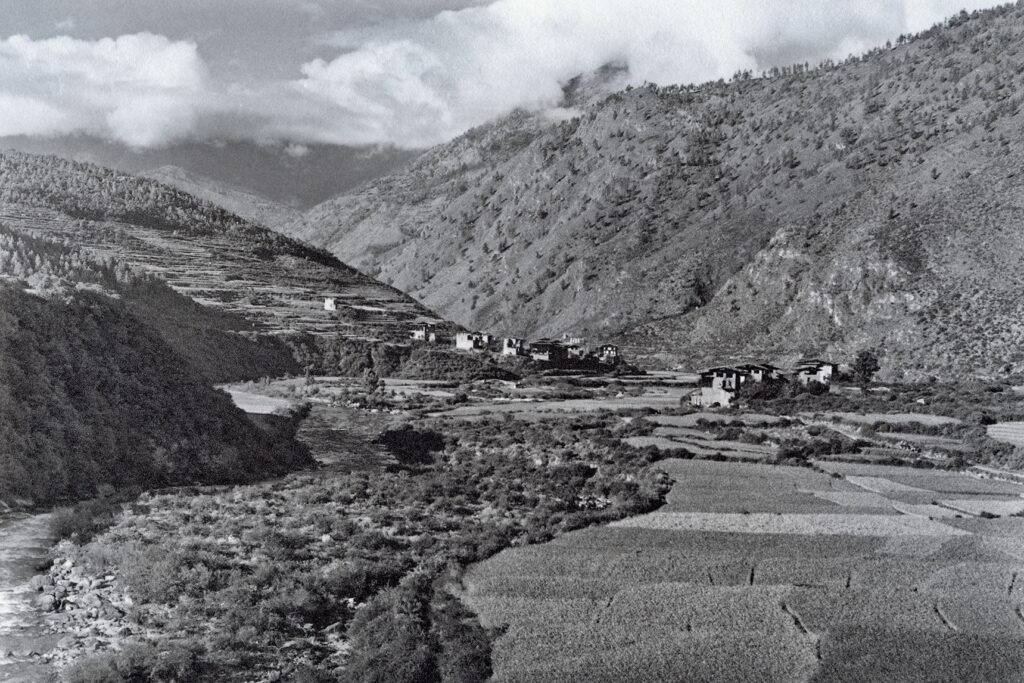
Thimphu Valley, photographed by George Sherriff, 1949.

This book will illustrate these recent changes through a series of comparative photographs, taken at the same location on different dates. Bhutan Then, Now, and Tomorrow will include a selection of historic works from the 18th-20th centuries juxtaposed with current photographs taken by award-winning photographer, writer, and filmmaker, John Wehrheim. The imagery will be accompanied by a narrative that contextualizes the changes that have occurred, through diverse lenses such as architecture, ecology, and cultural traditions. 

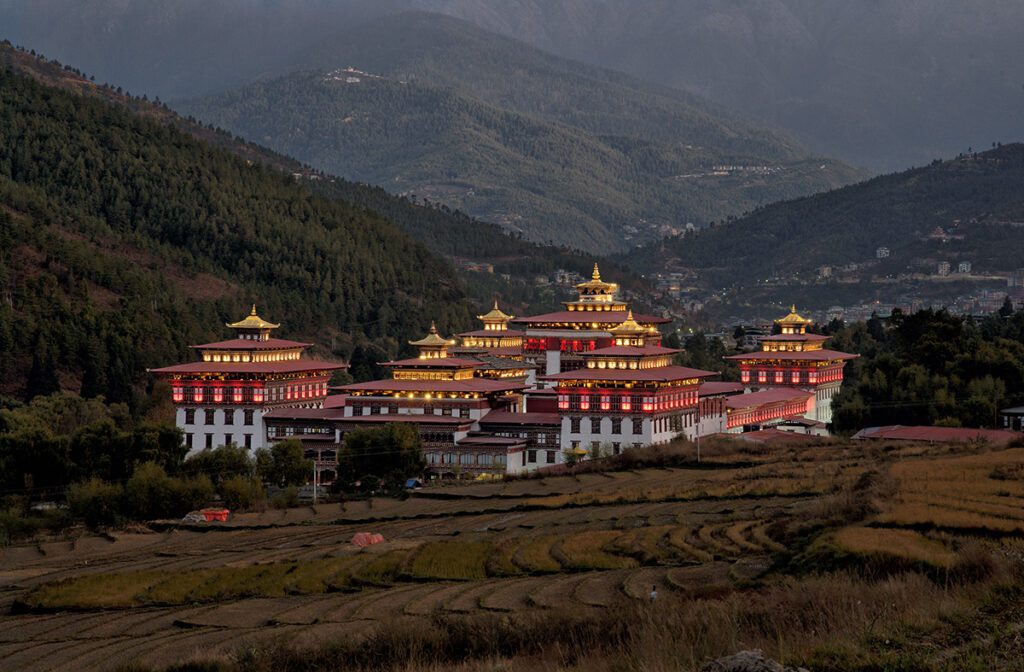
Tashiccho Dzong in Thimphu Valley, photographed by John Wehrheim, 2022.

The project will also archive images of Bhutan that are scattered and, in many cases, largely unknown. The hope is that this publication helps future generations to better understand a development path that prioritizes Gross National Happiness and the unique value of Bhutan’s cultural and environmental landscape. 

A Glimpse


into the country’s future, framed by the concept of Gross National Happiness